
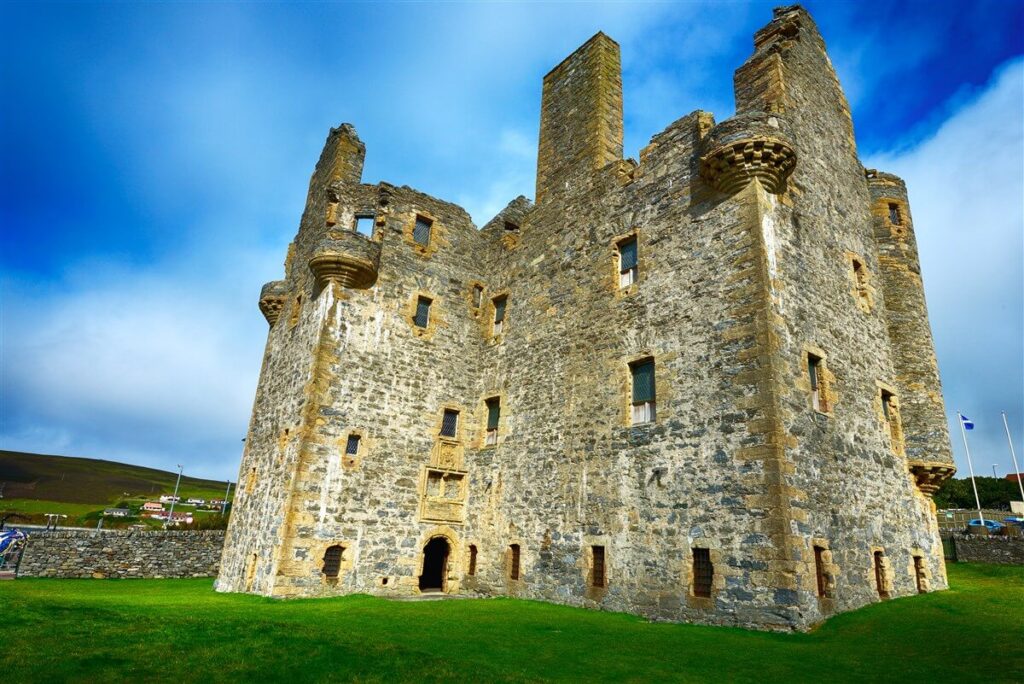
Scalloway Castle is a striking part of the village’s skyline. Its surviving stone walls also tell a less comfortable story: one associated with authority, oppression and the rule of Patrick Stewart, earl of Orkney and Shetland.
Historic Environment Scotland describes the building as a sophisticated late-16th-century tower house. Built in 1599, it was Stewart’s home and remains a prominent reminder of his power in Shetland. Historic Environment Scotland.
Who was Earl Patrick?
Stewart became known in Shetland as “Black Patie”. Historic Environment Scotland records his reputation for oppression and the accusation that forced labour was used to construct the castle.
That history matters when looking at the building. Its scale and architectural ambition are only part of the story; the circumstances of its construction and the people affected by Stewart’s rule belong alongside them. He was eventually executed in Edinburgh in 1615. The castle’s official history and overview.
A place in the wider village story
The castle is one chapter in a much longer history. Scalloway served as Shetland’s capital until 1708, and its earlier connections reached towards the assembly held at Tingwall. Understanding that wider setting helps explain why the village’s history extends well beyond one powerful resident. Promote Shetland’s Central Mainland guide.
The neighbouring museum offers another way into that story. Its collections cover the settlement and its people, placing the castle alongside other periods of local life. Scalloway Museum visitor overview.
Can you visit Scalloway Castle?
The castle is currently closed for conservation work. Do not include interior access in your itinerary unless Historic Environment Scotland confirms that it has reopened.
Check the official visitor page before travelling, and follow any signs or restrictions at the site. Current castle access information.
Explore more of Scalloway and Shetland

Scalloway’s harbour and roofless castle offer a starting point for understanding Shetland. The village’s story connects ancient settlement, Norse government…
